Taigene Achieves ISO 26262 ASIL-D Certification, Demonstrating Automotive Functional Safety Expertise
Taigene Electric Machinery has successfully passed the TÜV NORD ISO 26262:2018 ASIL-D process certification.
This certification not only confirms that Taigene meets the highest standards of automotive functional safety, but also highlights the company’s professional capabilities in developing products that comply with the most stringent safety requirements.
TÜV NORD Group is one of Germany’s most reputable certification organizations. Established more than 150 years ago, it is a globally recognized third-party testing and certification institution.
__25K28tS1WP.png "MicrosoftTeams-image (32)")
-
__25K28yvMUB.png "MicrosoftTeams-image (31)") ISO 26262:2018 is an internationally recognized standard for maintaining automotive safety and is widely applied in the functional safety evaluation and verification of automotive electronic products. The standard ensures that vehicle components perform their functions reliably while emphasizing rigorous controls throughout the product development process to prevent system failures.
ISO 26262:2018 is an internationally recognized standard for maintaining automotive safety and is widely applied in the functional safety evaluation and verification of automotive electronic products. The standard ensures that vehicle components perform their functions reliably while emphasizing rigorous controls throughout the product development process to prevent system failures.ISO 26262:2018 classifies product risk levels from ASIL-A to ASIL-D, with ASIL-D representing the highest safety level. Achieving this level signifies excellence in the field of automotive electronics and contributes to raising the overall functional safety standard within the automotive industry.
To accomplish this challenging goal, a cross-departmental team composed of R&D and Quality Assurance members first passed professional examinations to obtain TÜV NORD Functional Safety Engineer certification. Through numerous rounds of discussions, revisions, and process development, the team successfully established internal standards and documentation, ultimately completing the certification on schedule.
-
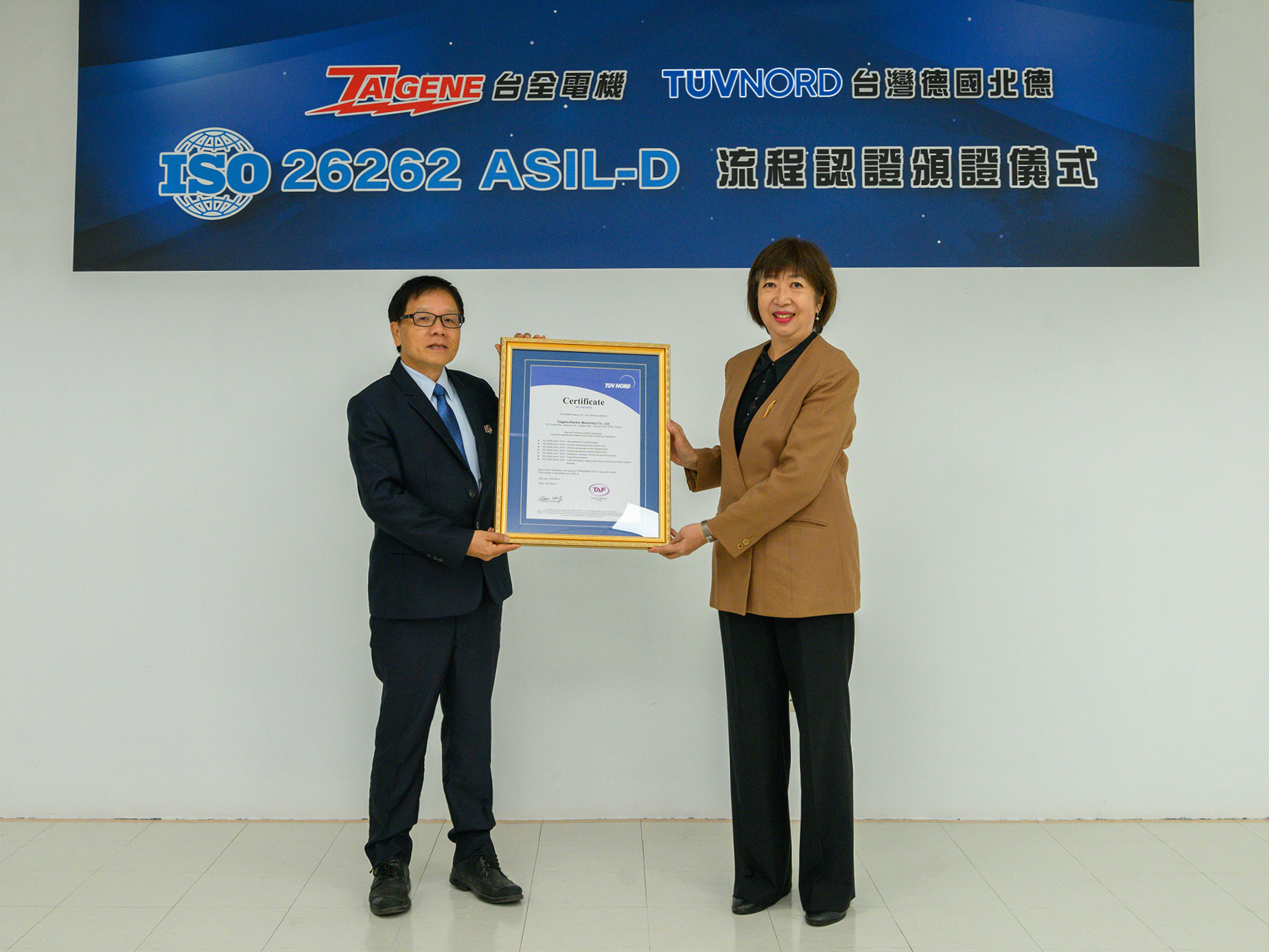
Obtaining the ISO 26262:2018 ASIL-D process certification signifies that Taigene is fully prepared to meet the highest functional safety standards in the automotive industry.
Our safety policy is:
Committed to a Safer Future — We Keep the Future SaferEditor: Mr. Yuan (Electronic Control Development)